Furniture / 3 min read
Furniture photography tips for a believable showroom image
Perspective, texture and usable space matter as much as a beautiful composition.
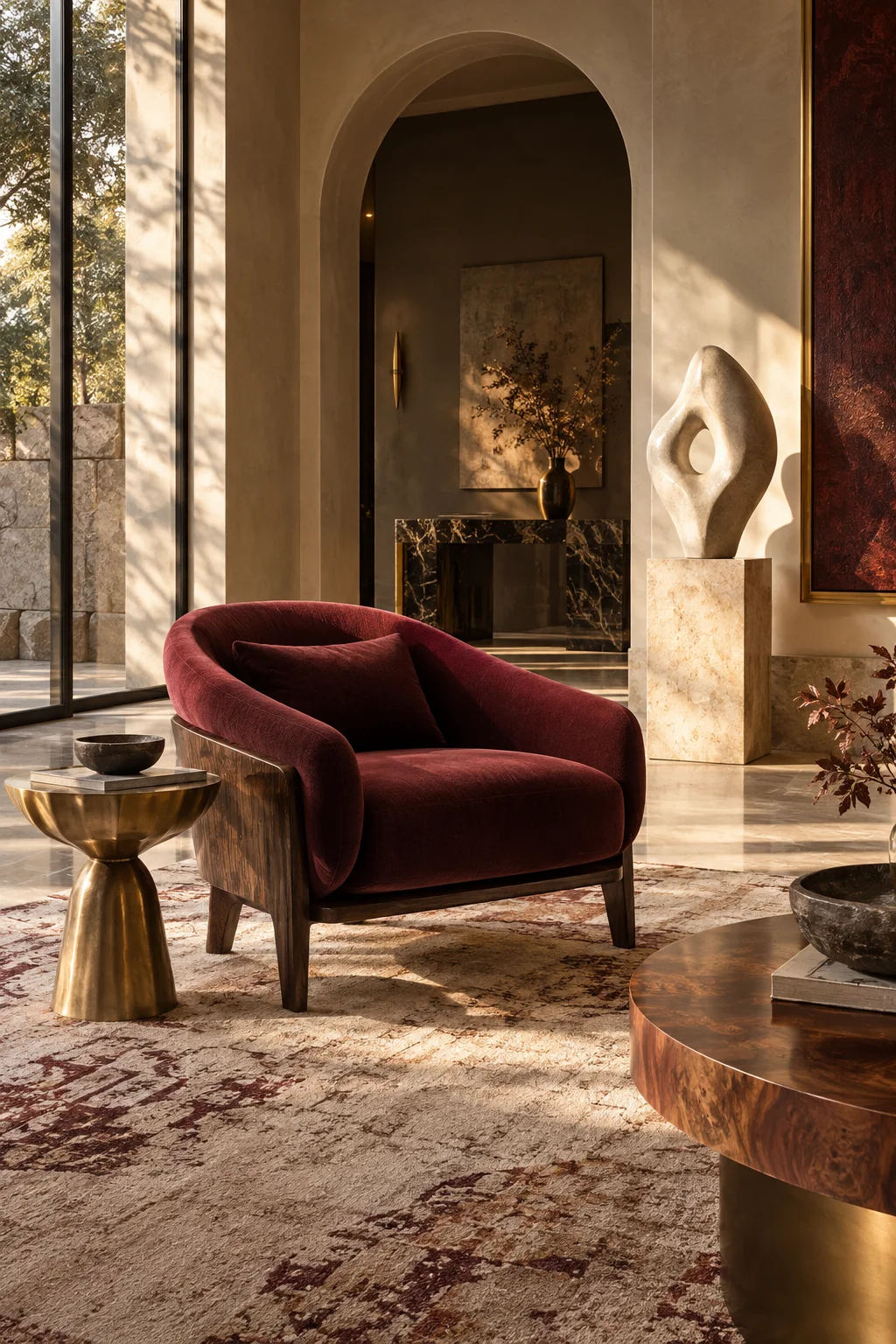
Choose a camera position that preserves proportion
Step back when possible and use a moderate field of view rather than pushing a very wide lens close to the furniture. Keep the camera level to reduce leaning vertical lines. Photograph from a height that reveals the piece naturally. A sofa should not appear much deeper at one end because of the angle. Take a straight-on view and a three-quarter view so the customer can understand both silhouette and depth.
Style enough, then stop
A cushion, lamp or book can give context, but too many props make it hard to identify what is being sold. Choose accessories that support scale and material without hiding edges or upholstery. Leave believable walking space around the piece. State whether styling items are separate. An image can feel inviting without implying the customer is buying everything in the frame.
Let the finish retain its texture
Use light that shows the grain, weave or surface without blowing out highlights. Mixed showroom lighting can make finishes inconsistent, so reduce conflicting light sources where practical. Take a neutral reference frame and compare the edited image with the product. Do not smooth fabric until it looks like another material. Accurate texture helps a viewer ask better questions, even though it cannot replace touching a sample in person.
Capture useful details
Photograph legs, handles, seams, joins and any distinctive construction. Pair close-ups with a full product view so the detail has context. For storage furniture, show the interior only when it is safe and appropriate. Keep the product clean and remove temporary packaging that is not part of the design. Avoid retouching out construction features that will remain on the item delivered to the customer.
Check the background and reflections
Remove distracting price cards, abandoned packaging and private customer paperwork. Check mirrors, glossy surfaces and glass for unintended reflections of people or equipment. Do not digitally enlarge the room to create a misleading sense of space. If the image represents a styled example rather than the actual showroom location, make that context clear. A real store image should help someone recognise the place when they arrive.
Prepare a consistent product set
Use similar angles and lighting for pieces from the same collection. Include approved dimensions and material information in the associated product record. Keep original files and final edits linked to the model identifier. Export images for their intended use rather than stretching one crop into every format. Before publication, check on a phone that the edges are intact, the finish looks credible and the main piece is unmistakable.
Before you publish
A small final check.
- Straight-on and three-quarter views
- Finish checked against the real product
- Details paired with a full view
- Accessories identified separately
With Srajan
Bring more of your world into view.
Explore how Srajan approaches creative work for furniture businesses.
Explore our furniture workFurniture · 4 min read
How to show furniture dimensions in product content
Show furniture width, depth and height clearly in product photographs, with readable measurements and practical questions about room fit and delivery.
Read the article: How to show furniture dimensions in product contentFurniture · 3 min read
Furniture showroom content ideas that help people picture the room
Show scale, materials and everyday use rather than another isolated product image.
Read the article: Furniture showroom content ideas that help people picture the room