Furniture / 3 min read
Furniture showroom content ideas that help people picture the room
Show scale, materials and everyday use rather than another isolated product image.
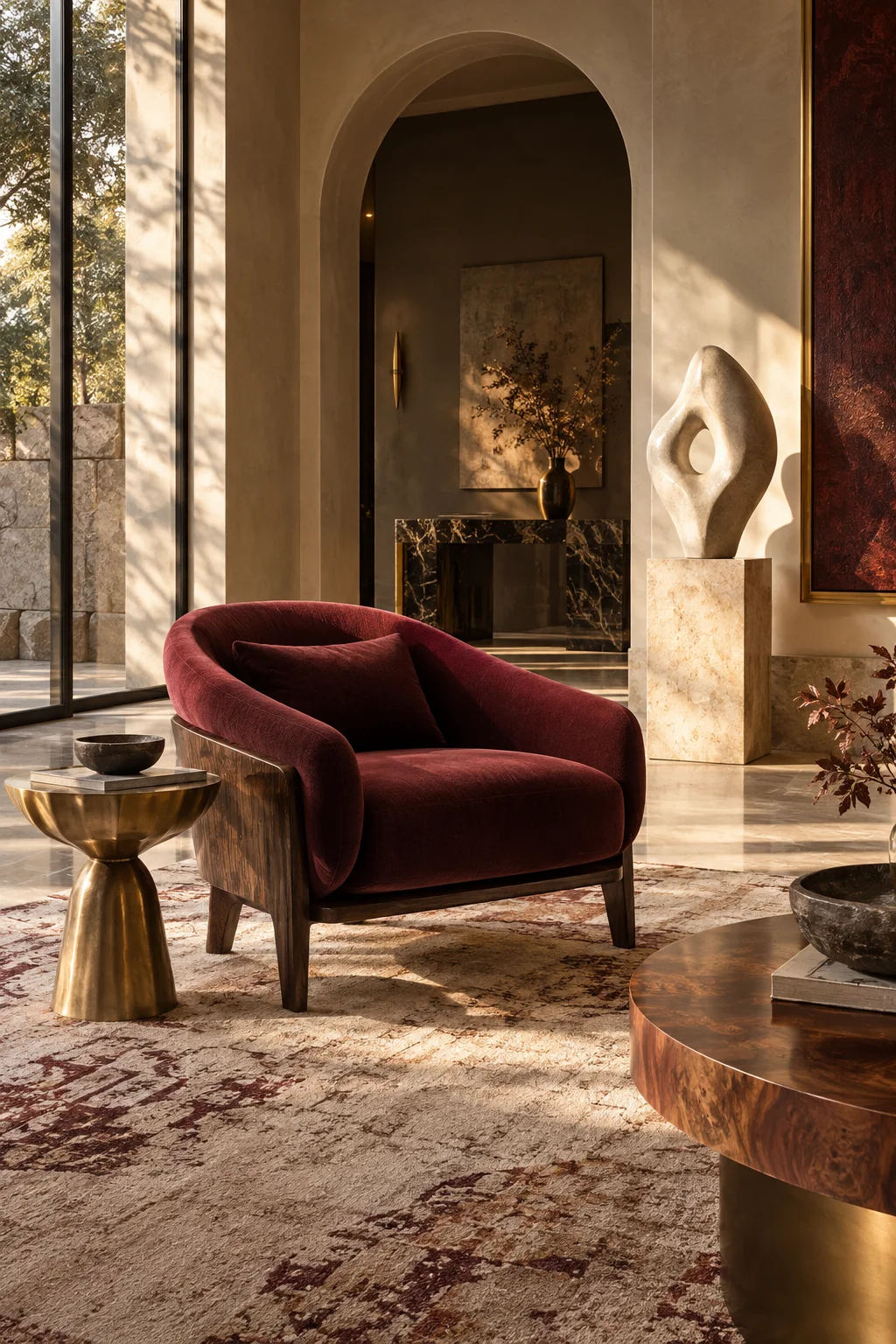
Make scale visible
A furniture photograph can look impressive while leaving a customer unsure how large the piece is. Include verified dimensions and a view in a believable room. Show the clearance around a chair, table or cabinet when it is relevant. Avoid enlarging a room with extreme lens distortion. A permitted person in the frame can help communicate scale, but dimensions remain important because viewers cannot reliably estimate size from a styled image alone.
Show the material up close
Photograph the upholstery texture, wood finish, joinery or handle at a useful distance. Explain what the store can confirm about the material and care requirements. Do not infer solid wood, genuine leather or a specific finish from appearance. If a customer can choose among finishes, show representative samples with clear names and explain any variation that matters. Natural materials may vary between individual pieces; a photograph should not imply perfect uniformity.
Demonstrate an everyday function
Film a drawer opening, an extension table changing size or a recliner moving through its range. Use the product as instructed and keep hands clear of moving mechanisms. Show the function at normal speed with an unobstructed camera view. A demonstration can answer a practical question more clearly than a list of adjectives. Do not imply a feature belongs to every model when only the featured piece has it.
Create a realistic room pairing
Pair a sofa with a side table or a dining table with chairs that fit comfortably. Explain one visual or practical choice: seat height, colour balance or the space needed to pull out a chair. Keep accessories secondary and identify what is included in the purchase. A styled corner should be achievable, not a composition that works only because furniture has been placed too close together for everyday use.
Answer a common ownership question
Customers ask about delivery, assembly, upkeep and whether a piece suits a particular room. Some answers depend on the product or address, so distinguish general guidance from confirmed terms. A material-specific care post can be useful if the manufacturer’s instructions support it. Avoid universal claims such as stain-proof or maintenance-free. Show the relevant detail and invite product-specific questions where a blanket answer would be misleading.
Introduce the showroom through useful views
Show the entrance, layout and different display areas so a first-time visitor knows what to expect. Use photographs of the actual location, not another branch or a representative interior. Keep staff and customer permissions clear. A furniture showroom’s online imagery should help people recognise the range and explore it with better questions. There is no need to attach a sales claim to every photograph.
Before you publish
A small final check.
- Verified dimensions included where relevant
- Materials described from product information
- Functional demonstrations show the exact model
- Room styling leaves believable space
With Srajan
Bring more of your world into view.
Explore how Srajan approaches creative work for furniture businesses.
Explore our furniture workFurniture · 4 min read
How to show furniture dimensions in product content
Show furniture width, depth and height clearly in product photographs, with readable measurements and practical questions about room fit and delivery.
Read the article: How to show furniture dimensions in product content
Furniture · 3 min read
Furniture reel ideas built around everyday questions
Use movement to show function, proportion and finish.
Read the article: Furniture reel ideas built around everyday questions